

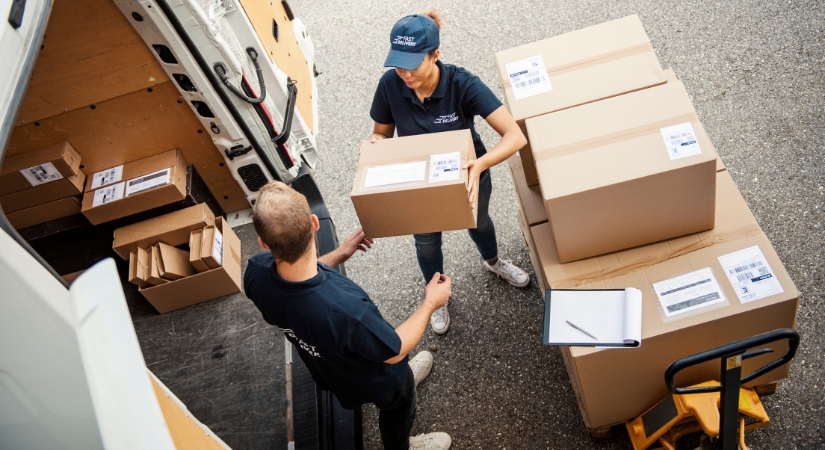
Everything you need to know to launch your first Amazon FBA product, from product research and sourcing to listing optimization and advertising. No hype, no shortcuts, just what actually works.
By the USA Sweet Solutions Editorial Team | March 2026
Amazon FBA (Fulfillment by Amazon) remains one of the most viable paths to building an ecommerce business in the United States. In 2025, Amazon’s third-party marketplace generated over $140 billion in gross merchandise sales in the US alone, with more than 60 percent of all units sold on Amazon coming from independent sellers. The opportunity is real. But so is the competition. The Amazon of 2026 is a very different place from the Amazon of 2019, and the strategies that worked five years ago can bankrupt you today.
This guide is designed for people who are serious about building an Amazon FBA business in 2026. We will walk through every step of the process, from setting up your account to launching your first product, with a focus on what is actually working now rather than recycled advice from outdated courses.
Step 1: Understand the Economics Before You Spend a Dollar
The single biggest reason new Amazon sellers fail is that they launch a product without fully understanding the economics. They see a product selling for $24.99, find a supplier who can make it for $3.50, and assume the difference is profit. It is not. Amazon’s fee structure is complex, and if you do not model it accurately before committing to inventory, you will lose money.
The Real Fee Breakdown
| Fee Type | Typical Range | Example ($24.99 product) |
| Referral Fee | 8-15% of sale price | $3.75 (15%) |
| FBA Fulfillment Fee | $3.22-$10+ (size/weight) | $3.86 (small standard) |
| Monthly Storage | $0.87-$2.40 per cubic ft | $0.25 per unit (avg) |
| Product Cost (landed) | Varies by product | $5.50 (incl. shipping) |
| PPC Advertising | $0.50-$5.00 per click | $3.00 per sale (estimated) |
| TOTAL COSTS | $16.36 | |
| NET PROFIT | $8.63 (34.5% margin) |
A healthy Amazon FBA product should target a net margin of 25 to 35 percent after all fees and advertising. Products below 20 percent margin are high-risk because any increase in competition, advertising costs, or Amazon fees can push you into unprofitability. Use Amazon’s Revenue Calculator (available in Seller Central) to model these numbers for every product you evaluate.
How Much Money Do You Need to Start
The realistic minimum investment to launch a single Amazon FBA product in 2026 is $3,000 to $5,000. This covers your first inventory order (typically 300 to 500 units), product photography, initial PPC advertising budget, and miscellaneous costs like UPC codes, brand registry, and packaging design. Can you start with less? Technically yes, but underfunding is the fastest path to failure. Starting with $1,000 usually means ordering too few units, running out of stock before your listing gains momentum, and not having enough budget to advertise during the critical launch period.
Step 2: Product Research — Finding What to Sell
Product research is where fortunes are made or lost on Amazon, and it is the step that most beginners rush through. The goal is not to find the perfect product. It is to find a product that meets a specific set of criteria that make profitability likely.
The Criteria That Matter in 2026
Price point: $15 to $50. Products under $15 are nearly impossible to make profitable after Amazon’s fees. Products over $50 require more capital and face higher customer expectations. The sweet spot is $20 to $35.
Small and lightweight. FBA fees are heavily influenced by size and weight. A product that fits in Amazon’s “small standard” size tier (under 15 inches on the longest side, under 1 pound) will have significantly lower fulfillment costs than anything larger. Avoid heavy, bulky, or fragile items for your first product.
Consistent demand. Look for products that sell year-round, not seasonal items. Use tools like Helium 10, Jungle Scout, or Keepa to verify that the top sellers in your target niche have stable monthly sales over the past 12 to 24 months.
Room for differentiation. This is the most important criterion and the hardest to evaluate. If the first page of Amazon search results for your target keyword is dominated by identical products with 5,000 or more reviews each, breaking in will be extremely difficult and expensive. Look for niches where the existing products have identifiable weaknesses (poor design, missing features, bad packaging, weak branding) that you can improve upon.
Not dominated by Amazon itself. Check if Amazon sells its own version (Amazon Basics, Amazon Essentials, etc.) in your target category. Competing directly against Amazon’s own products is a battle you will usually lose. They can undercut your price and get preferential placement.
The Tools You Need
Professional product research requires data, not guesswork. The three most widely used tools in 2026 are Helium 10 (the most comprehensive, starting at $29 per month), Jungle Scout (excellent for beginners, starting at $29 per month), and Keepa (free browser extension for price and sales rank history). These tools allow you to estimate monthly sales volume, analyze competition levels, track pricing trends, and identify seasonal patterns. Investing in at least one of these tools is not optional if you are serious about building a profitable business.
Step 3: Sourcing Your Product
Once you have identified a product opportunity, the next step is finding a manufacturer who can produce it at the quality and price point you need. The dominant sourcing model for Amazon FBA remains private label manufacturing from China, though suppliers in India, Vietnam, and domestic US manufacturers are increasingly viable alternatives.
Finding Suppliers
Alibaba remains the primary platform for finding overseas manufacturers, with over 200,000 active suppliers. The key to successful sourcing on Alibaba is not finding the cheapest supplier but finding a reliable one. Request samples from at least three to five suppliers before committing to an order. Evaluate samples for build quality, materials, packaging, and consistency. Negotiate pricing based on order volume (most suppliers offer meaningful discounts at 500 or more units), and always use Alibaba’s Trade Assurance for payment protection.
For US-based sourcing, platforms like ThomasNet, Maker’s Row, and the SBA’s supplier directories can help you find domestic manufacturers. US-made products cost more to produce but offer faster turnaround times, easier quality control, and the ability to use a “Made in USA” marketing angle that resonates with certain customer segments.
The Prep Center Model
Unless you plan to receive, inspect, label, and ship inventory to Amazon yourself, you will likely use a prep center. A prep center is a third-party warehouse that receives your shipment from the manufacturer, inspects items for defects, applies Amazon-required FNSKU labels, bundles products if needed, and ships them to Amazon’s fulfillment centers according to Amazon’s strict packaging and labeling requirements. Prep centers typically charge $1 to $3 per unit. For sellers working from home or with limited storage space, they are an essential part of the supply chain.
Step 4: Create a Listing That Converts
Your Amazon listing is your storefront, your sales pitch, and your brand’s first impression all in one. In 2026, with competition at all-time highs, a mediocre listing will not survive. Every element must be optimized.
Product Photography
Amazon allows up to nine images per listing, and you should use all nine. The main image must be on a pure white background (Amazon requirement), but your secondary images are where you sell. Include lifestyle images showing the product in use, infographic images highlighting key features and dimensions, comparison images showing your product next to competitors (without naming them), and close-up detail shots of quality materials and construction. Professional product photography costs $200 to $800 per product but is non-negotiable. The difference in conversion rate between professional and amateur photography is typically 30 to 60 percent.
Title, Bullet Points, and Description
Your title should include your primary keyword, the key benefit, and the most important product attribute, all within Amazon’s character limit (typically 200 characters). Bullet points should lead with benefits, not features. Instead of saying the product is made from 304 stainless steel, say it will never rust, stain, or retain odors, thanks to premium 304 stainless steel construction. Your description (or A+ Content if you have Brand Registry) should reinforce the narrative established in your images and bullets while addressing common customer objections.
Backend Keywords and SEO
Amazon’s search algorithm (A10) considers keywords in your title, bullets, description, and hidden backend search terms. Use tools like Helium 10 Cerebro to identify the exact keywords your competitors rank for, then ensure every relevant keyword appears at least once in your listing. Backend search terms have a 249-byte limit: use this space for synonyms, alternate spellings, and related terms that do not fit naturally in your visible content.
Step 5: Launch and Advertise
Listing your product on Amazon is not a launch. Without deliberate launch activities, your new product will sit on page 15 of search results where no one will ever find it. A successful launch requires a coordinated strategy across advertising, promotions, and external traffic.
Amazon PPC: Your Primary Growth Engine
Amazon’s advertising platform is pay-per-click (PPC), meaning you only pay when someone clicks your ad. The three main ad types are Sponsored Products (appear in search results, most important for new sellers), Sponsored Brands (banner ads for brand-registered sellers), and Sponsored Display (retargeting and off-Amazon placements).
For a new product launch, start with Sponsored Products campaigns. Create one automatic campaign (Amazon chooses keywords based on your listing content) and two to three manual campaigns targeting your highest-priority keywords with exact and phrase match types. Set a daily budget of $30 to $50 during the first two weeks to gather data. After 14 days, analyze which keywords are converting profitably and shift budget toward those winners while cutting money-losing keywords.
Expect to operate at break-even or a slight loss on advertising during your first 60 to 90 days. The goal during this period is not immediate profitability; it is to generate sales velocity, accumulate reviews, and build organic keyword rankings. Once your product organically ranks on the first page for your target keywords, you can reduce ad spend and let organic sales carry the majority of revenue.
Getting Your First Reviews
Reviews are the social proof that drives Amazon conversions. Products with fewer than 15 reviews convert at roughly half the rate of products with 50 or more reviews. Amazon’s official review programs include the Vine Program (available to brand-registered sellers, $200 per product for up to 30 reviews from trusted reviewers) and the Request a Review button in Seller Central (sends an automated email to buyers after delivery).
Never use paid reviews, review manipulation, or insert cards that ask for positive reviews with incentives. Amazon’s detection systems are sophisticated and the penalties are severe: account suspension, funds seizure, and permanent bans. The only sustainable path to reviews is selling a genuinely good product and using Amazon’s official tools.
Step 6: Common Mistakes That Kill New FBA Businesses
Choosing a product based on passion rather than data. Your personal interest in a product is irrelevant to its viability on Amazon. Let the numbers guide your decisions, not your hobbies.
Ordering too much inventory upfront. Start with 300 to 500 units of your first product. If it fails (and statistically, many first products do), you want to lose $2,000, not $20,000. Scale up only after you have validated demand and profitability.
Ignoring cash flow. Amazon pays sellers every two weeks with a 14-day reserve hold on new accounts. If you order $5,000 in inventory, it might be 60 to 90 days before you see that money back. Plan your cash flow accordingly and never invest money you cannot afford to lose.
Competing on price alone. Racing to the bottom on price is a death spiral. Instead of being the cheapest, be the best-branded, best-presented, and best-reviewed option in your niche. Customers on Amazon are willing to pay a premium for products that look professional and trustworthy.
Neglecting Brand Registry. Amazon Brand Registry (requires a registered trademark, which costs $250 to $350 through the USPTO) unlocks A+ Content, Brand Analytics, Vine, and critical protection against hijackers and counterfeiters. Register your trademark before or immediately after launch. It is one of the highest-ROI investments you can make as an Amazon seller.
Realistic Expectations: What Success Actually Looks Like
The internet is full of stories about Amazon sellers making six figures in their first month. Those stories are either outliers, exaggerations, or from a different era of Amazon selling. Here is what realistic success looks like for a new seller launching their first product in 2026.
Month 1 to 3: You are learning, spending money on advertising, accumulating reviews, and iterating on your listing. Most sellers operate at break-even or a loss during this period. Revenue of $3,000 to $10,000 per month is a reasonable target for a well-researched first product.
Month 4 to 6: Your organic rankings have improved, review count is climbing, and advertising efficiency is getting better. Profit margins should be stabilizing at 20 to 30 percent. Monthly revenue of $5,000 to $15,000 is achievable.
Month 7 to 12: Your first product is generating consistent profit. You launch your second and third products to diversify risk and increase revenue. Many successful sellers reach $10,000 to $30,000 per month in revenue by the end of their first year, with $2,000 to $8,000 in monthly net profit.
Building a sustainable Amazon FBA business that generates $100,000 or more in annual profit typically takes 18 to 24 months of focused effort and continuous reinvestment. It is a real business, not a get-rich-quick scheme. Treat it as such, and your odds of success increase dramatically.
Thinking about launching on Amazon FBA?
USA Sweet Solutions helps entrepreneurs across the Americas build profitable Amazon businesses. From product research and sourcing to listing optimization and PPC management, we guide you through every step.
usasweetsolutions.com | Start your Amazon journey today.
About the Author
This article was written by the USA Sweet Solutions Editorial Team. USA Sweet Solutions LLC helps businesses across the Americas build and scale their digital presence through strategic marketing, web development, ecommerce consulting, and business formation services. Learn more at usasweetsolutions.com.